McFarland’s Theatre Royal Varieties
1885-1888
Music Hall · Theatre
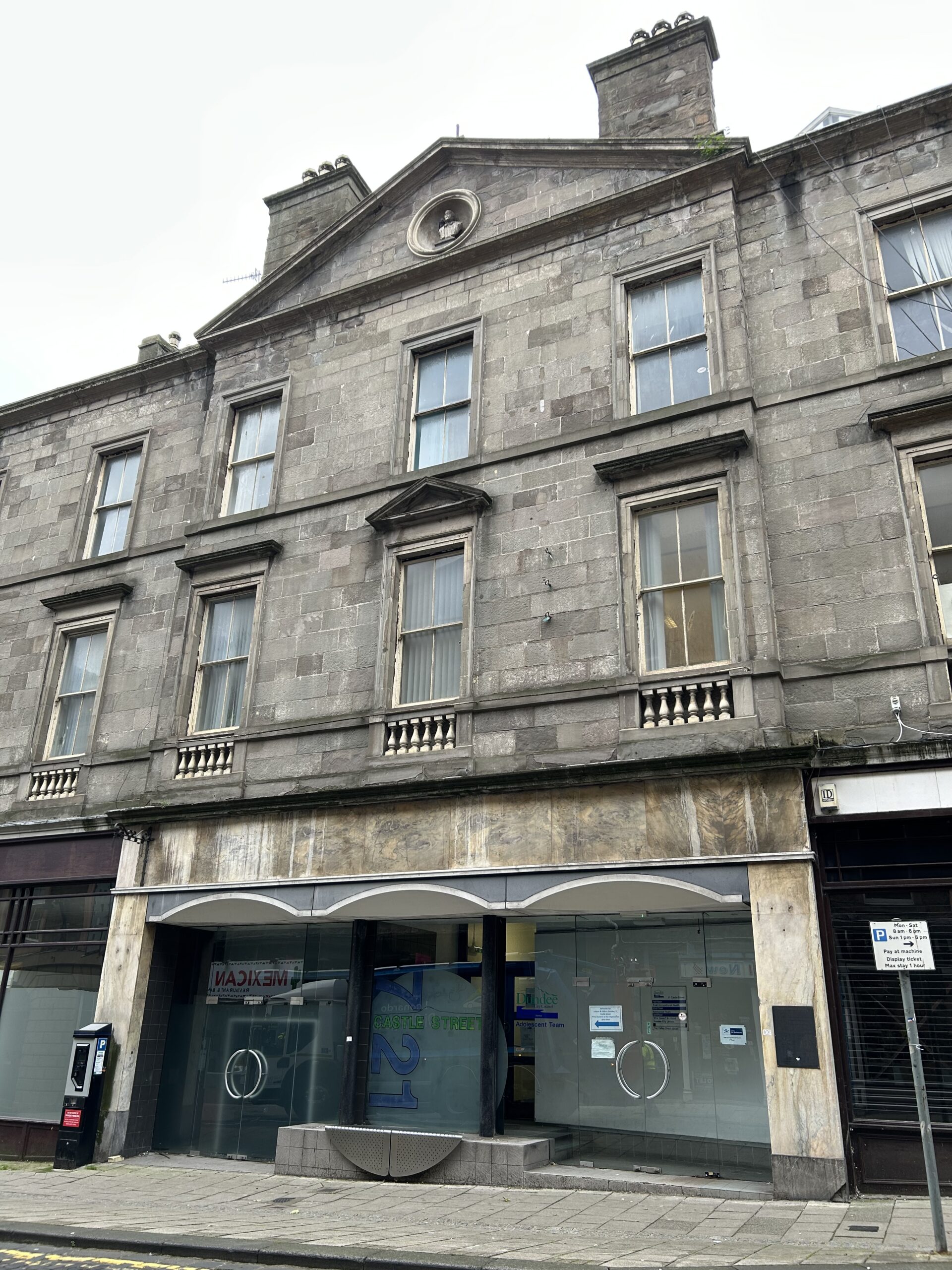
7-21 Castle Street
Location details
- Other names
- Theatre Royal
- Owner / operator(s)
- William McFarland (from 1876)
- Opened
- Sep 1885
- Closed
- Oct 1888
- Entrance price
- (1888) Boxes 1s, Pit 6d, Gallery 3d
- Present status
- Façade extand
Stories from this location
| McFarland’s Varieties, on Castle Street, opened in September 1885 in what had previously been known as the Theatre Royal.
The Theatre Royal had originally opened in 1810. An elegant building, with a large stage, three tiers of boxes and an extensive gallery it was particularly praised for the decoration of theatrical painter James Francis Williams:
William McFarland became licensee of the Theatre Royal in September 1876 and staged a variety of entertainments including opera, music hall performances and waxwork exhibitions.[i] By the early 1880s, and with the opening of Her Majesty’s Theatre in the Seagate, the Theatre Royal’s story as the home of legitimate theatre in Dundee was on the wane. The final evening of dramatic performance came on Saturday 26 September 1885. This was not to be the end of performances at the old Royal, however.[ii] Seeing an opportunity, McFarland renamed it the McFarland’s Theatre Royal Varieties and it came to be known, albeit briefly, as a music hall and variety house: Last night witnessed the opening of a new era in the history of the Theatre Royal. Henceforth in Dundee the knights of the sock and buskin will strut upon a more spacious and modern stage, and the Castle Street temple, now the property of its enterprising lessee, is to be dedicated to the form of pleasant and enjoyable amusements which have hitherto been provided in the Music Hall.[iii] The Evening Telegraph described the opening night’s entertainment, highlighting the variety of performances witnessed in a music hall. G K Buik’s act consisted of a series of renditions of “Scotch” songs; Clem Lawton delivered “negro entertainment” while Madame Campobello’s “rich and powerful voice, tone, feeling, and expression” was widely applauded. Added to the entertainment was Mr W H Howard’s banjo playing, “consisting as it did in one instance of playing the banjo behind his back and dancing Scotch reels to its music” and the contortionists Howe and Athol, the men frogs: “They writhe their, to all appearance, boneless bodies into inconceivable shapes and positions, and perform acrobatic feats a novel description. Their bodies, serpent-like in their flexibility, wriggle through chairs and hoops to the amazement of the spectators”. Yet it was comedian Robert Geldard who proved the star of the show. Returning to the city after an absence of some years he took to the stage to sing three songs and was recalled five times.[iv]
The theatre closed for refurbishment in March 1888 and on the morning of 6 October the theatre was gutted by fire. According to a report for the Evening Telegraph the blaze made the “neighbourhood of Castle Street … weirdly picturesque”: “The roof had fallen in with a loud crash, and showers of sparks and flames rose high in the air. The woodwork within fed the flames, and the mass continued to burn with great fury, the appearance of the interior being similar to that of a huge furnace.” ‘Great Fire in Dundee: Destruction of M’Farland’s Theatre of Varieties’, Dundee Evening Telegraph, 6 October 1888, p3.
The interior of the building was subsequently rebuilt as shop units rather than a theatre. However, the frontage of the theatre remains, with Shakespeare’s bust gazing down from a roundel located in the pediment that crowns the façade. |
[i] ‘The re-opening of the Theatre Royal’, The Dundee Courier & Argus, 15 September 1876, p6.
[ii] Boyd, op cit., p1.
[iii] ‘Opening of M’Farland’s Theatre Royal of Varieties,’ The Dundee Courier and Argus, 29 September 1885, p5.
[iv] ‘Theatre Royal of Varieties’, The Evening Telegraph, 29 September 1885, p3.
From the collection
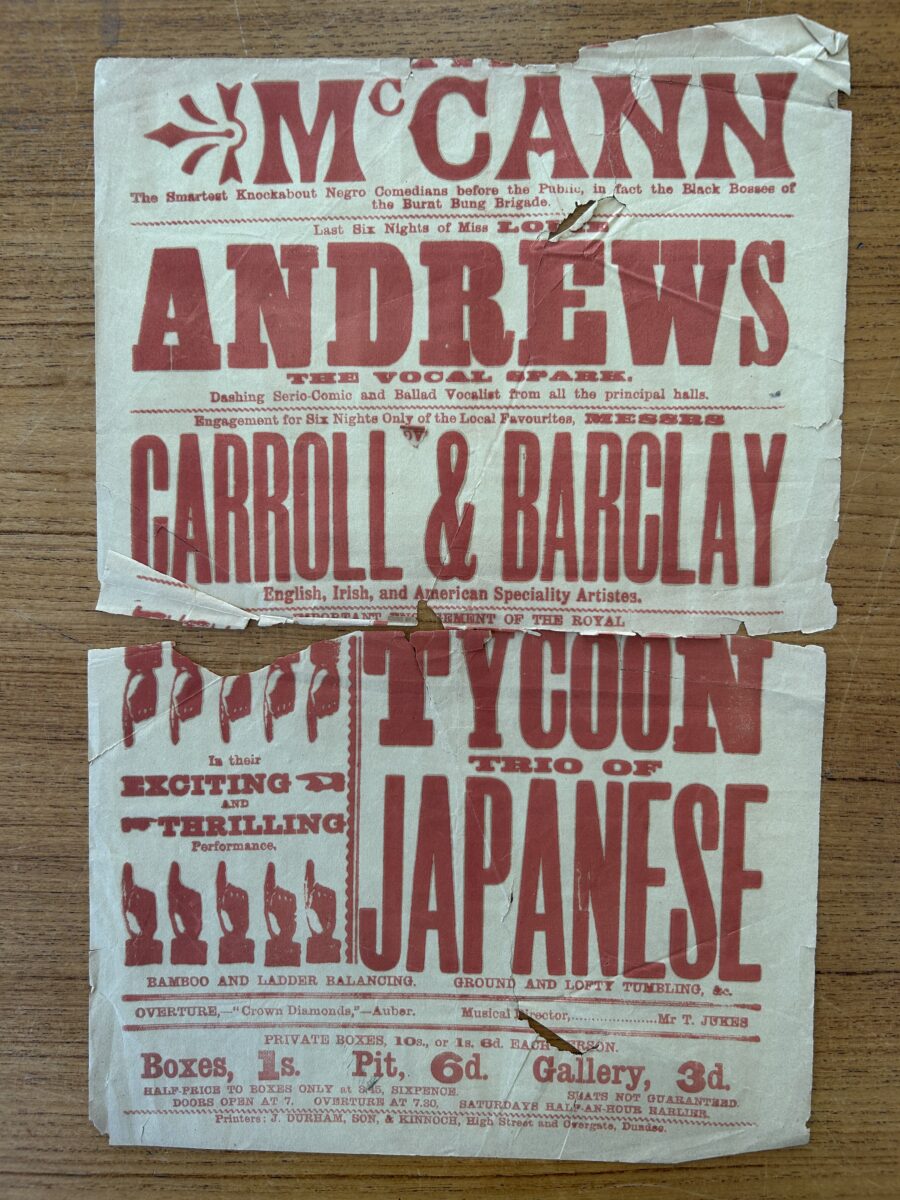
Theatre Royal Varieties poster, 22 November 1887
Poster · McFarland’s Theatre Royal Varieties (1885-1888)
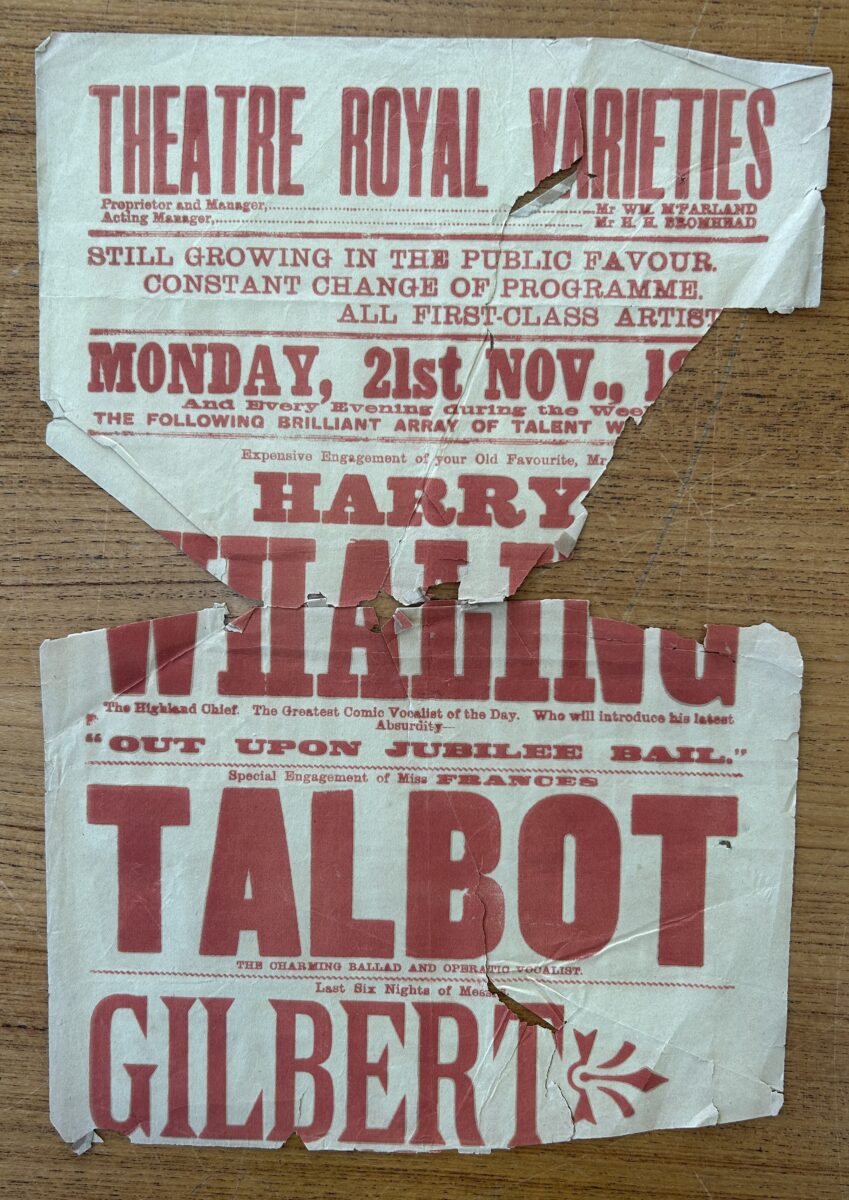
Theatre Royal Varieties poster, 21 November 1887
Poster · McFarland’s Theatre Royal Varieties (1885-1888)
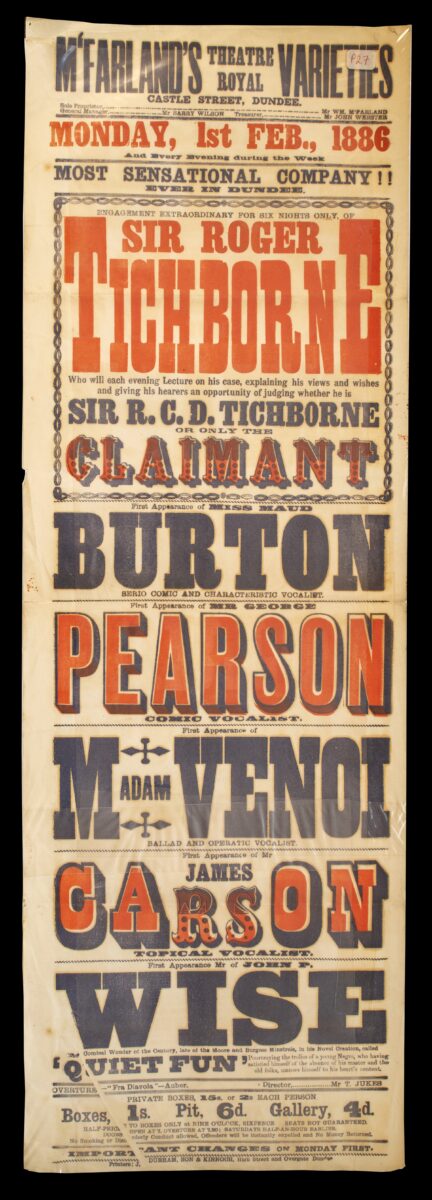
McFarland’s Theatre Royal Varieties poster, 01 February 1886
Poster · McFarland’s Theatre Royal Varieties (1885-1888)
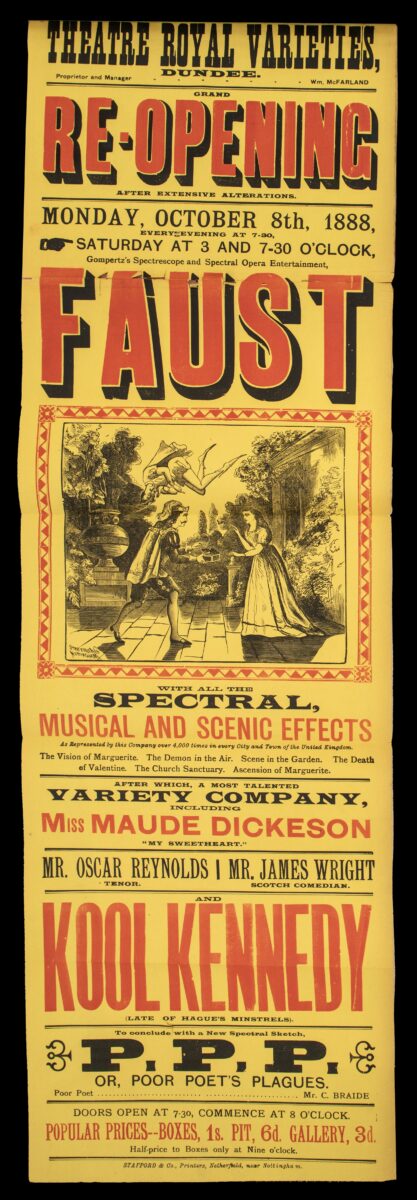
Theatre Royal Varieties poster, 08 October 1888
Poster · McFarland’s Theatre Royal Varieties (1885-1888)
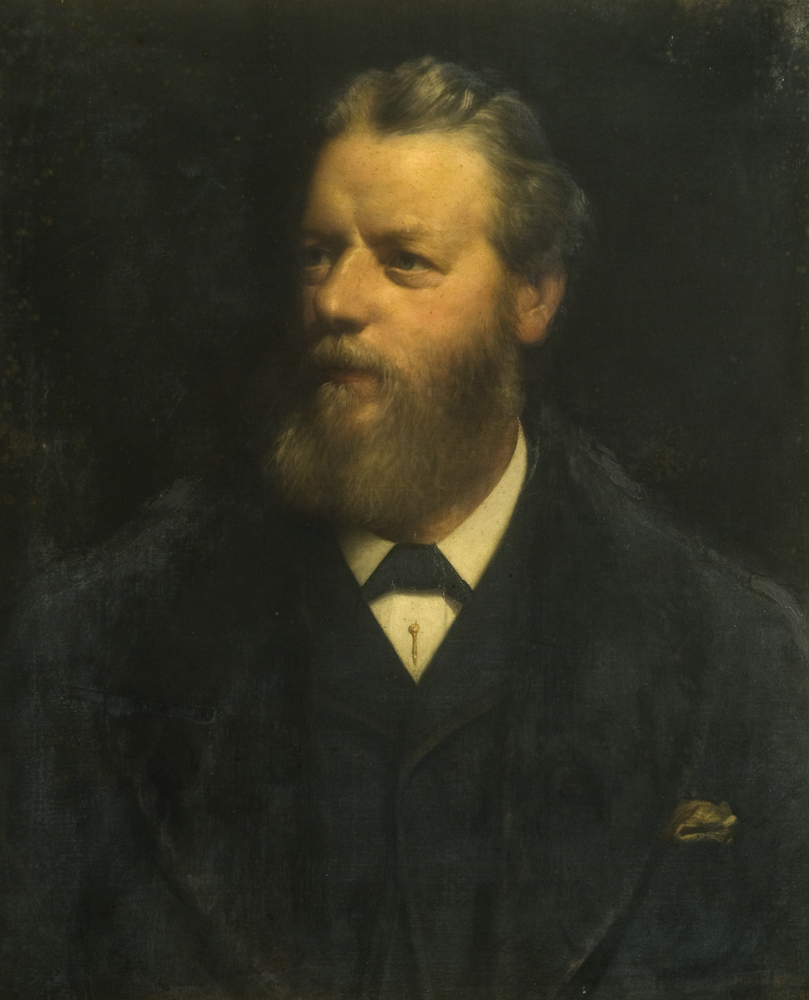
William McFarland (1836–1898)
Painting · Kinnaird Hall (1865-1901)
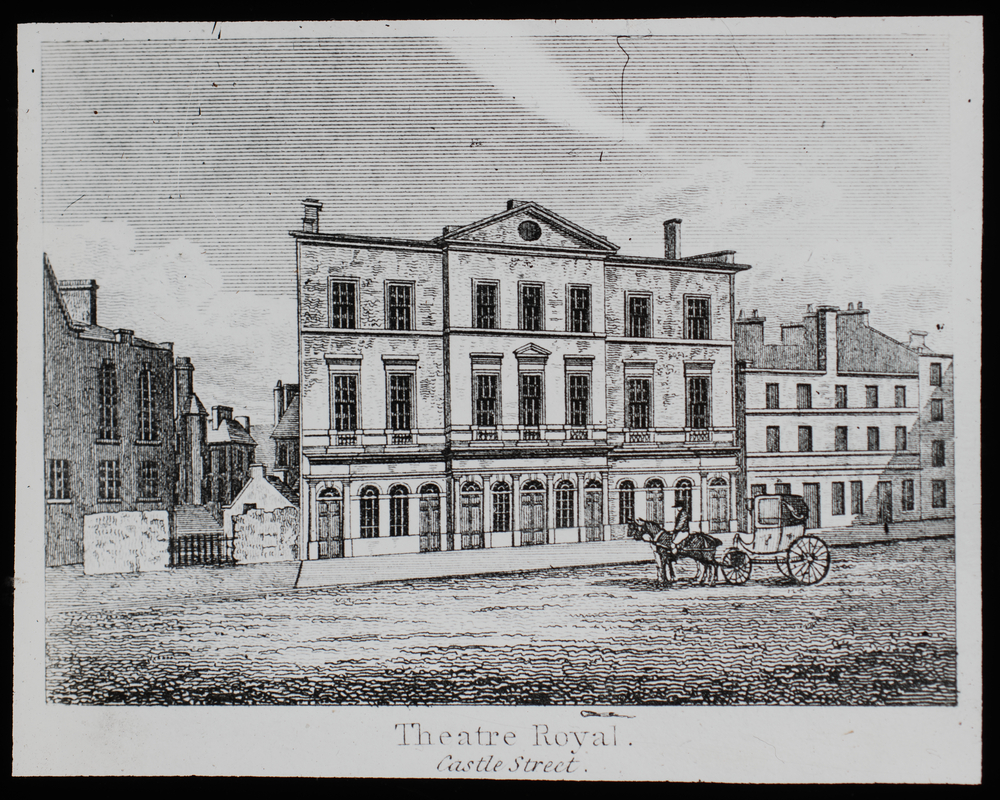
Glass slide of Theatre Royal Dundee, undated
Glass slide · McFarland’s Theatre Royal Varieties (1885-1888)