
When researching nineteenth-century theatre, it can initially be difficult to distinguish between a playbill and a poster. In many respects, the two served similar purposes, functioning both as advertising materials and as programmes that provided details of performers and performances. The principal difference between the two formats was their size.
Two examples from the ‘Mapping Dundee’s Music Halls’ collection, both produced for William McFarland and printed only a few years apart, provide a useful comparison.
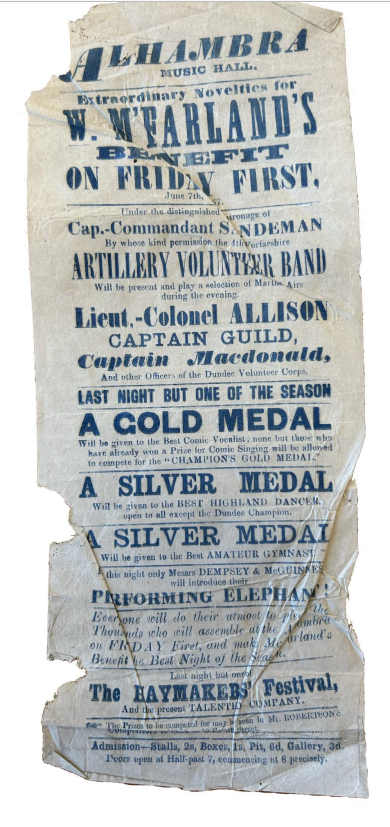
Alhambra Music Hall playbill, 1867
The Alhambra Music Hall playbill (7 June 1867) measures 27.3 × 11.0 cm. Small enough to be distributed at the venue, it provided patrons with information about the evening’s entertainment.
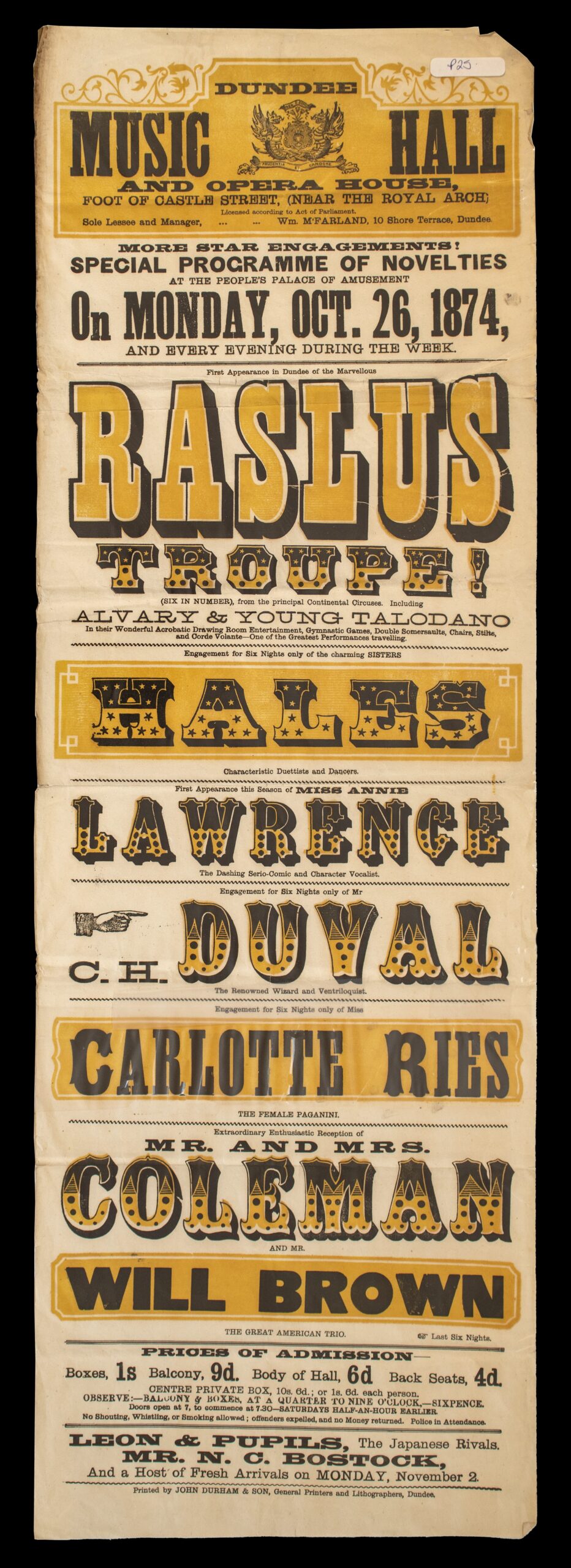
Dundee Music Hall & opera House poster, 1874
In contrast, the poster for Dundee Music Hall and Opera House (26 October 1874) is considerably larger, measuring 76.0 × 25.3 cm. Its size made it impractical for use as a programme within the hall; instead, its primary purpose was advertising.
A key factor in the shift from playbills to posters was the growing adoption of lithographic printing during the mid- to late nineteenth century. This process enabled printers and theatre managers to incorporate multiple colours into their designs, making posters far more visually striking and effective at attracting attention.
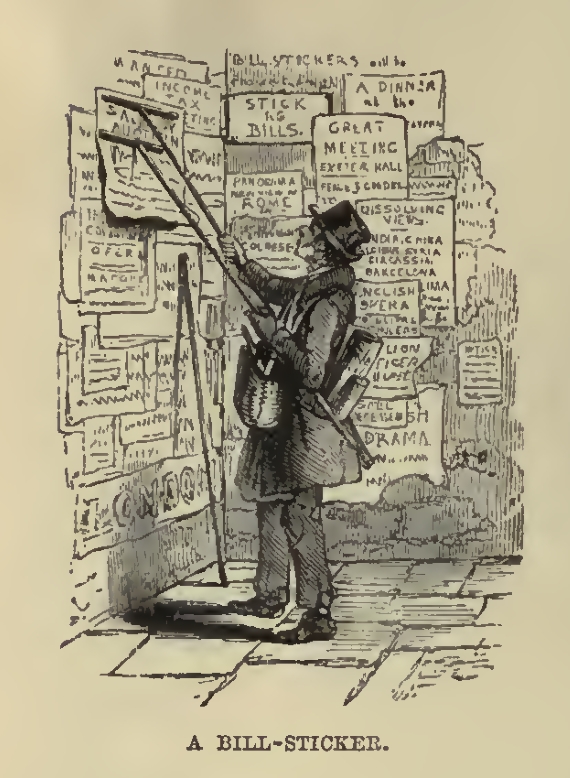
Both playbills and posters could be displayed on hoardings and used for advertising. However, the smaller size and monochrome appearance of playbills meant they lacked the visual impact of a brightly coloured poster.
As posters no longer needed to function as programmes, theatre managers also tended to include less detailed information about individual acts than was typically found on playbills.
By the 1860s, the popularity of playbills had begun to decline, as theatre managers increasingly favoured multi-page programmes of the kind more familiar to audiences today.
Dr Billy Rough, School of Art History, University of St Andrews, 2026